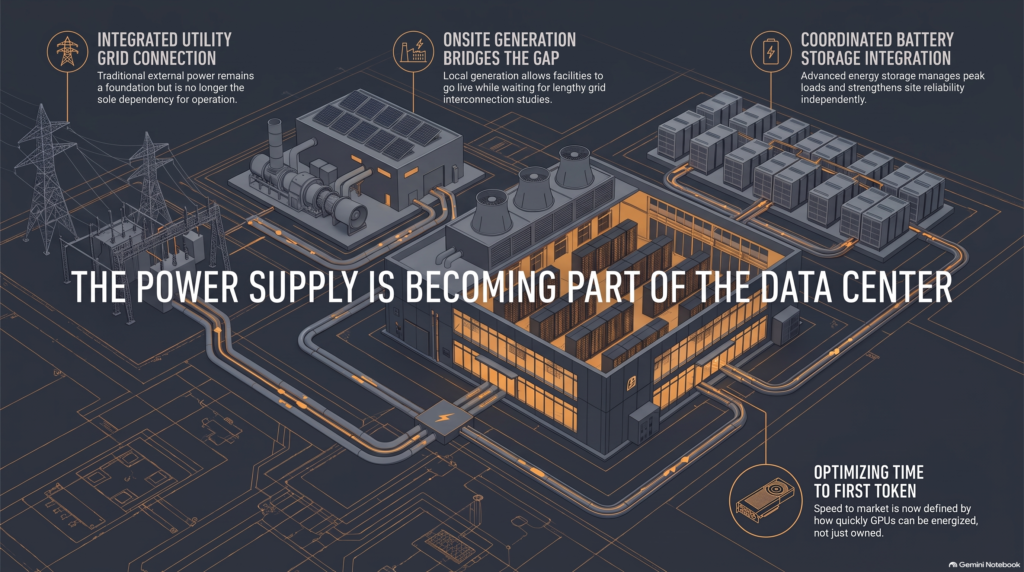
The power supply is becoming part of the data center.
The artificial-intelligence infrastructure race is producing an important shift in how data centers are designed.
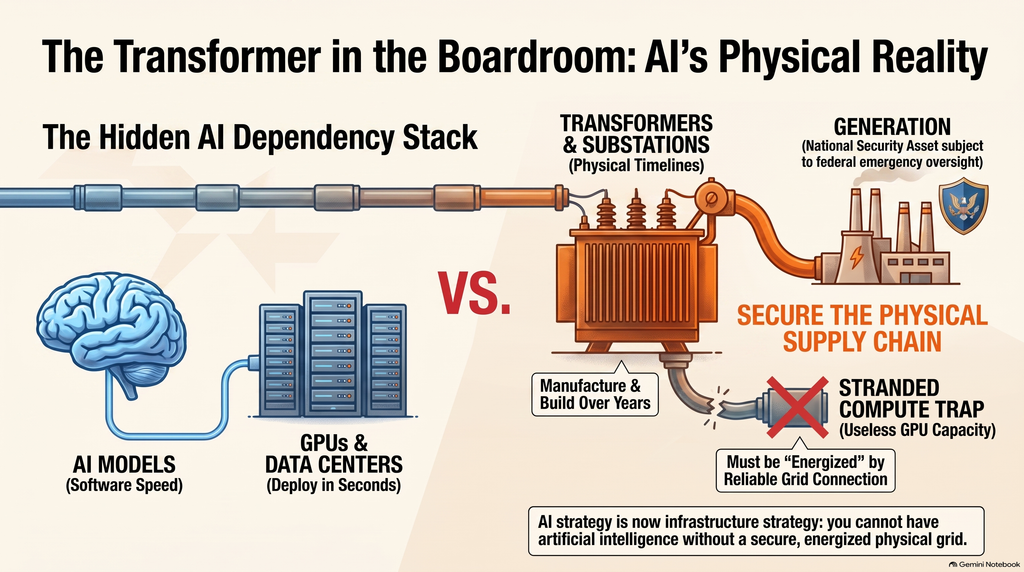
For years, developers could treat electricity largely as an external utility service. They selected a location, applied for a grid connection and built the facility around the expectation that sufficient power would eventually arrive.
That model is becoming less dependable.
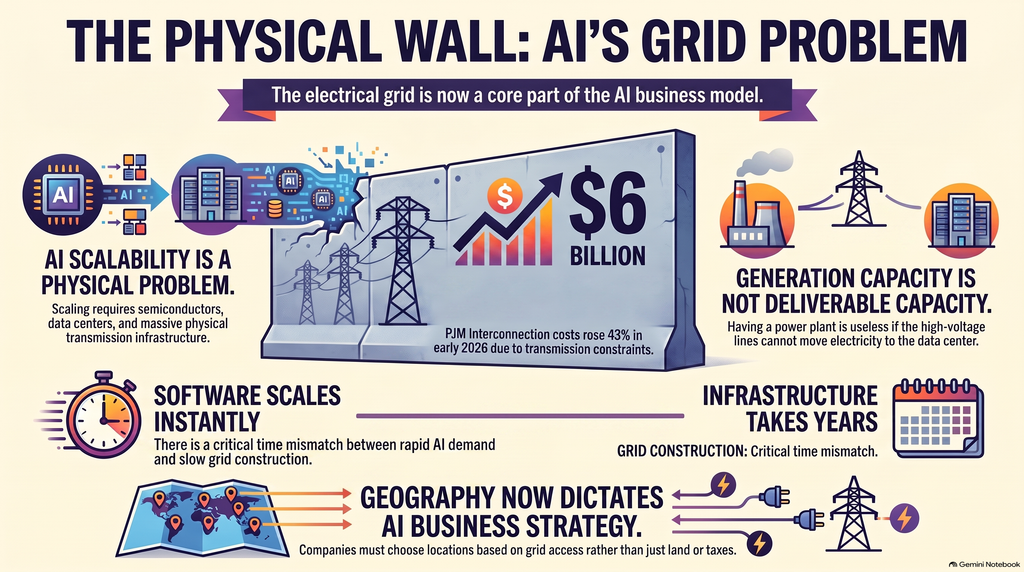
AI data centers require enormous amounts of electricity, often concentrated within a relatively small geographic area. At the same time, utilities must contend with transmission constraints, transformer shortages, lengthy interconnection studies and project requests that may be speculative or duplicated.
The result is a widening gap between having plans for a data center and having the power required to operate one.
A $2.6 Billion Signal
Vertiv has agreed to acquire UtilityInnovation Group, a company specializing in microgrids, advanced power controls and behind-the-meter power architecture for data centers.
The agreement calls for approximately $1.45 billion in cash at closing, with as much as $1.15 billion in additional payments tied to future earnings targets. That places the potential transaction value at approximately $2.6 billion.
The acquisition is expected to add microgrid controls, onsite-generation orchestration, specialized switchgear and energy-storage integration to Vertiv’s existing power and cooling portfolio.
That is more than a routine expansion of product offerings.
It is evidence that power availability is moving upstream into the earliest stages of data-center planning.
Vertiv describes the expanded architecture as extending from the utility interconnection to the chip. Its stated objective is to support grid-connected facilities, bridge-to-grid projects and sites capable of operating independently through onsite generation.
In other words, the power supply is becoming part of the data center itself.
Why Waiting for the Grid Is Becoming a Competitive Risk
A developer may control the land, secure financing and purchase computing equipment, yet remain unable to bring the facility online because the local grid cannot supply the requested load.
That delay carries serious consequences.
Equipment can sit idle. Construction schedules can slip. Customer commitments can be missed. Capital remains tied up in infrastructure that is not producing usable computing capacity.
For AI companies, this creates a direct connection between energy availability and speed to market.
The competitive metric is no longer merely how many GPUs a company owns. It is how quickly those GPUs can be converted into operational compute.
The industry increasingly describes this as “time to power” or “time to first token.”
Both phrases point to the same underlying reality: compute capacity does not exist in a commercially meaningful sense until it can be energized.
What a Microgrid Changes
A microgrid can coordinate multiple sources of electricity within a defined site or operating area. Depending on its design, it may combine utility service with onsite generation, battery storage and advanced control systems.
This creates several possible operating models.
A grid-connected data center can use onsite resources to strengthen reliability or manage peak loads.
A bridge-to-grid facility can begin operating with onsite generation while waiting for a larger utility connection.
An islanded facility can operate independently when utility power is unavailable or insufficient.
These options do not make the traditional grid irrelevant. Large data centers may still require substantial utility service over the long term.
What changes is the developer’s dependence on a single delivery timeline.
Instead of waiting passively for the grid to expand, the project can be designed around a coordinated portfolio of energy sources.
Power Architecture Is Now Data-Center Architecture
This shift has consequences beyond electrical engineering.
Site selection must account for access to natural gas, renewable resources, storage capability and future utility interconnection—not merely available land.
Financing must cover generation and energy infrastructure as well as buildings, cooling and computing hardware.
Operating plans must address fuel availability, emissions, maintenance, cybersecurity and the interaction between onsite systems and the surrounding grid.
Regulators and communities will also have questions about who absorbs the cost, risk and environmental impact of these facilities.
Bringing your own power does not eliminate infrastructure constraints. It relocates and redistributes them.
A microgrid can reduce dependence on the utility queue, but the project still needs credible equipment, fuel, permits, controls and operating capability. The bottleneck may move from grid interconnection to turbine availability, gas supply, emissions approval or energy-storage procurement.
There is no magic extension cord hiding behind the data center.
A New Test of Project Readiness
The move toward onsite power could also make the distinction between declared demand and observed readiness more visible.
A speculative developer may submit a large electricity request to preserve a position in the grid queue.
An execution-ready developer can demonstrate site control, financing, equipment commitments, a credible load schedule and an integrated power plan.
One has declared demand.
The other has evidence of deployment readiness.
That distinction will matter as utilities, investors and regulators decide which projects deserve scarce infrastructure capacity.
The Larger Signal
Vertiv’s proposed acquisition suggests that energy infrastructure is no longer an adjacent concern for the data-center industry. It is becoming part of the core technology stack.
The emerging architecture is not simply:
Grid → Data center → Servers
It is becoming:
Grid + onsite generation + storage + controls → operational compute
That creates opportunities for microgrid developers, equipment manufacturers, energy-management platforms, project financiers and specialists capable of coordinating infrastructure across traditional industry boundaries.
It also changes the competitive landscape.
The next generation of AI infrastructure leaders may not be the companies that merely reserve the largest amount of electricity. They may be the companies that can prove they possess an executable path from site selection to energized compute.
The power queue is not disappearing.
But the most serious developers are beginning to engineer their way around it.